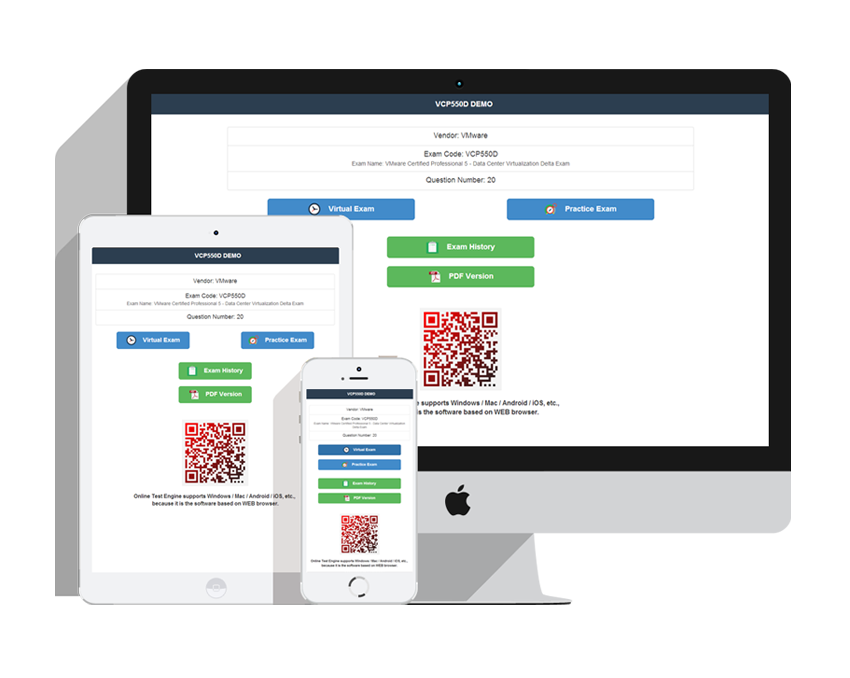
Reading notes is one thing; sitting a timed test is another. The ExamTorrent desktop and online test engines for Certified-Data-Engineer-Professional recreate the pressure of exam day, and every one of the 250 practice questions can be reviewed afterwards until the reasoning sticks.
Databricks Certified-Data-Engineer-Professional Exam Syllabus Topics:
| Section | Objectives |
|---|---|
| Topic 1: Debugging and Deploying | - Deploying CI/CD
|
| Topic 2: Developing Code for Data Processing using Python and SQL | - Using Python and Tools for Development
|
| Topic 3: Data Modelling | - Dimensional Modelling
|
| Topic 4: Ensuring Data Security and Compliance | - Data Security
|
| Topic 5: Data Sharing and Federation | - Delta Sharing
|
| Topic 6: Data Transformation, Cleansing, and Quality | - Advanced Data Transformation
|
| Topic 7: Monitoring and Alerting | - Monitoring
|
| Topic 8: Cost & Performance Optimisation | - Delta Optimization
|
| Topic 9: Data Governance | - Unity Catalog Permissions
|
| Topic 10: Data Ingestion & Acquisition | - Design and implement data ingestion pipelines
|
Databricks Certified-Data-Engineer-Professional Exam — Your Questions, Answered
The Certified-Data-Engineer-Professional exam, officially titled Databricks Certified Data Engineer Professional, is the Databricks exam you pass to earn the Databricks Certification certification, a credential at the Professional level. Passing it confirms the skills defined in the official exam outline, and it is associated with related credentials such as Databricks Certified Data Engineer Associate.
The Certified-Data-Engineer-Professional exam includes 59 scored questions questions and gives you 120 minutes to finish them. That is a tight pace per question, so get used to reading each stem once, flagging anything uncertain, and moving on rather than getting stuck. Running timed practice tests in the ExamTorrent desktop or online test engine is the most reliable way to build that rhythm before exam day.
The passing score for the Certified-Data-Engineer-Professional exam is Not publicly specified in the current official exam guide, and the official registration fee is USD 200, plus applicable taxes as required by local law. Keep in mind that a failed attempt means paying USD 200, plus applicable taxes as required by local law again in full to retake it, so book your slot only when your scores on ExamTorrent practice tests sit consistently above the passing line.
Databricks lists the following prerequisites or eligibility notes for the Certified-Data-Engineer-Professional exam: No mandatory prerequisite. Databricks recommends related course attendance and approximately one year of hands-on experience performing the Data Engineering tasks covered by the exam.. Requirements can change over time, so confirm the details on the official exam page at Databricks's official site before you register.
Yes. ExamTorrent offers a free PDF demo of the Certified-Data-Engineer-Professional material, so you can check the question style and answer quality before purchasing. Every purchase also includes 365 days of free updates, and if your product expires you can extend the update service at a 50% discount from your member zone.
Your purchase is protected by a 100% Money Back Guarantee with clear conditions: if you take the corresponding Certified-Data-Engineer-Professional exam within 60 days of purchase and do not pass, you can apply for a full refund. The candidate name must match the payer name, and you need to submit a scanned exam enrollment slip together with the official Score Report PDF within 2 days of taking the exam; claims are processed within 7 days. Sitting the exam within 3 days of purchase, downloading without taking the exam, free materials, and expired orders are not covered. If you would rather not take a refund, you can exchange your order for two free exam products of equal value and keep the update service on your original purchase.
Delivery is instant: your download links are emailed within one minute of payment, and you can also download directly from the website. If nothing arrives within 2 hours, contact customer service and check your spam folder. There is no limit on how many computers you can install the material on.
The Certified-Data-Engineer-Professional exam blueprint is divided into 10 domains, starting with Developing Code for Data Processing using Python and SQL; Cost & Performance Optimisation; Data Ingestion & Acquisition. For the complete domain-by-domain breakdown, see the Exam Topics section above — it lists every topic the current outline covers.
Databricks Certified Data Engineer Professional Sample Questions:
The Databricks workspace administrator has configured interactive clusters for each of the data engineering groups. To control costs, clusters are set to terminate after 30 minutes of inactivity.
Each user should be able to execute workloads against their assigned clusters at any time of the day.
Assuming users have been added to a workspace but not granted any permissions, which of the following describes the minimal permissions a user would need to start and attach to an already configured cluster.
- A. "Can Restart" privileges on the required cluster
- B. "Can Manage" privileges on the required cluster
- C. Workspace Admin privileges, cluster creation allowed. "Can Attach To" privileges on the required cluster
- D. Cluster creation allowed. "Can Attach To" privileges on the required cluster
- E. Cluster creation allowed. "Can Restart" privileges on the required cluster
Correct Answer: A 🗳️
Explanation: Only visible for ExamTorrent members. You can sign-up / login (it's free).
Incorporating unit tests into a PySpark application requires upfront attention to the design of your jobs, or a potentially significant refactoring of existing code.
Which statement describes a main benefit that offset this additional effort?
- A. Troubleshooting is easier since all steps are isolated and tested individually
- B. Ensures that all steps interact correctly to achieve the desired end result
- C. Yields faster deployment and execution times
- D. Validates a complete use case of your application
- E. Improves the quality of your data
Correct Answer: A 🗳️
Explanation: Only visible for ExamTorrent members. You can sign-up / login (it's free).
A data engineer is building a Lakeflow Declarative Pipelines pipeline to process healthcare claims data. A metadata JSON file defines data quality rules for multiple tables, including:
{
"claims": [
{"name": "valid_patient_id", "constraint": "patient_id IS NOT NULL"},
{"name": "non_negative_amount", "constraint": "claim_amount >= 0"}
]
}
The pipeline must dynamically apply these rules to the claims table without hardcoding the rules.
How should the data engineer achieve this?
- A. Reference each expectation with @dlt.expect decorators in the table declaration.
- B. Use a SQL CONSTRAINT block referencing the JSON file path.
- C. Invoke an external API to validate records against the metadata rules.
- D. Load the JSON metadata, loop through its entries, and apply expectations using dlt.expect_all.
Correct Answer: D 🗳️
Explanation: Only visible for ExamTorrent members. You can sign-up / login (it's free).
A security team wants to enforce data protection for a customer table containing customer PII data. To comply with local policies, sales team members should only see customers from their region, while non-admin users should have email addresses masked. Which implementation approach should be used when using Unity Catalog row filters and column masks?
- A. Create SQL UDFs for row filtering based on user region and column masking based on group membership, then apply them using ALTER TABLE SET ROW FILTER and ALTER COLUMN SET MASK commands.
- B. Implement row filters with SQL UDFs based on user region only since column masks cannot be combined with row filters on the same table, then apply them be recreating the table with DROP TABLE and CREATE TABLE SET ROW FILTER commands.
- C. Use table ACLs to restrict access using tags with GRANT SELECT ON table_name WITH TAG command, and rely on application-level filtering for sensitive data based on user region.
- D. Create a view with dynamic WHERE clauses for region filtering and use string replacement functions for email masking using ALTER COLUMN SET MASK command.
Correct Answer: A 🗳️
Explanation: Only visible for ExamTorrent members. You can sign-up / login (it's free).
The data engineering team maintains the following code:
Assuming that this code produces logically correct results and the data in the source tables has been de-duplicated and validated, which statement describes what will occur when this code is executed?
- A. The enriched_itemized_orders_by_account table will be overwritten using the current valid version of data in each of the three tables referenced in the join logic.
- B. An incremental job will detect if new rows have been written to any of the source tables; if new rows are detected, all results will be recalculated and used to overwrite the enriched_itemized_orders_by_account table.
- C. A batch job will update the enriched_itemized_orders_by_account table, replacing only those rows that have different values than the current version of the table, using accountID as the primary key.
- D. No computation will occur until enriched_itemized_orders_by_account is queried; upon query materialization, results will be calculated using the current valid version of data in each of the three tables referenced in the join logic.
- E. An incremental job will leverage information in the state store to identify unjoined rows in the source tables and write these rows to the enriched_iteinized_orders_by_account table.
Correct Answer: A 🗳️
Explanation: Only visible for ExamTorrent members. You can sign-up / login (it's free).
Viewing page 1 out of 50 pages.
Viewing questions 1-5 out of 250 questions.


 13 Customer Reviews